
Newport Beach Sources for Previous Residents
No single Newport Beach resident roll reaches from the current address to the first household. The strongest trail combines the Orange County deed index, parcel and planning material, historical directories, federal census schedules, newspapers, and probate or obituary evidence. Each source has a different date range and a different meaning, so the era table should be read as a research ladder rather than as a claim of continuous coverage.
| Source | Verified local years or coverage | Where | What it contributes |
|---|---|---|---|
| Recorder index | Earliest online year not officially stated; pre-1982 citation format and 1982 forward numbering | RecorderWorks, counter, or mail copy route | Ownership instruments and party chain |
| Directory and telephone samples | Verified examples from 1920 through 2002, discontinuous | State Library, NARA, Newport Beach Public Library, and cited city reports | Occupant or business at a printed address |
| Federal census | Public schedules through 1950 under the 72-year rule | NARA, Ancestry, and HeritageQuest | Household members, relationships, and occupation |
| Sanborn map | May 1922, nine Newport Beach-area sheets | Library of Congress | Building footprint, use, and street layout |
| City permits and planning | Online case records vary; older files by request | Newport Beach Community Development and City Clerk | Physical changes, applicants, and project dates |
| Local newspapers | Local coverage from the 1940s through the early 2000s, with broader databases | Newport Beach Public Library and NewsBank | Obituaries, sales, social notices, and business context |
| Probate and court files | Case-specific index and file retention rules | Orange County Superior Court | Estates, petitions, heirs, and filed notices |
Begin with the period you can name. For a recent transfer, use APN and deed citations. For an older household, move quickly to directories, census schedules, newspapers, and maps. When a source is discontinuous, record the gap instead of filling it with an assumed occupant.
Begin With Newport Beach’s APN
An APN is the parcel number used to identify land in county property systems. The Orange County Assessor gateway connects public property information and parcel maps through ParcelQuest. Start with the situs address in the assessor-linked system or City of Newport Beach GIS, copy the APN exactly, and preserve the legal or tract context shown with it. The situs address identifies where the parcel sits. A tax mailing address may belong to a trust, manager, agent, or a different residence.
The address-first flow is simple: address validation, APN, current owner or assessee, recorded acquisition, prior grantor, earlier deed, then historical occupancy sources. City GIS can add parcel geometry, planning cases, association boundaries, ZIP context, annexation era, and other map layers. It does not turn a parcel pop-up into proof of who lived there.
Keep a research note for every change in parcel identity. A subdivision, merger, tract reference, or street-label change can make a modern address look absent from an older record. Legal description and lot, block, or tract language are the bridge when a street name stops matching.
Newport Beach Previous Residents: Deed Chain
RecorderWorks is a grantor-grantee index, so it normally begins with a party name rather than a street address. Search the current owner or assessee after the parcel step, then use the resulting instrument citation to verify the legal description. The deed’s grantor is the next earlier search subject. Continue until the citation no longer identifies the same parcel, then shift to older books, maps, or archival help.
- Identify the current APN, situs address, and legal description from the assessor or parcel map.
- Search the current owner’s name in RecorderWorks with a narrowed recording-date range and spelling variants.
- Record the instrument number or book and page, document type, party roles, and recording date.
- Order or inspect the deed so the legal description and vesting match the parcel.
- Search the deed’s grantor as an earlier grantee, adding spouse, trust, estate, and entity variants when supported.
- Repeat backward, using tract and lot context when the street address changes or disappears.
A deed of trust is a financing instrument, not a change in ownership. Releases and reconveyances close liens. The chain of title is the sequence of ownership instruments for one parcel, while a legal description identifies the land more reliably than a postal line. A seller’s mailing or notice address on a deed is not automatically a residence.
- Grantor
- The party transferring an interest in the recorded instrument.
- Grantee
- The party receiving the interest named in that instrument.
- Chain of title
- The linked sequence of transfers that connects later ownership to earlier ownership for the same land.
- Legal description
- Lot, block, tract, metes, or other land language that fixes parcel identity when a street address changes.
Newport Beach Recorder Citations Change in 1982
Orange County’s citation practice changes at 1982. Documents before 1982 require book, page, and instrument information when available. Documents from 1982 forward use the recording year plus a six-digit instrument number. The research does not state the earliest searchable online year, so a prior resident search must not publish an invented cutoff or assume that an empty web result proves that no earlier deed exists.
The free Orange County RecorderWorks index supplies citations, not document images. Recorder staff expressly will not conduct a search by phone, mail, or in person. Search online first, then carry the citation to the counter or use the official copy instructions. Copies are listed at $1 per page plus $1 certification for each document or map. Mail requests go to Orange County Clerk-Recorder, 601 N. Ross Street, Santa Ana, CA 92701, with a self-addressed stamped envelope and a check payable to County of Orange. The copy-question phone number is 714-834-2500.
Recorder search tip. Resolve name variants and obtain the instrument number online before ordering. The citation is the handoff from a free index to a paid copy or counter inspection.
Newport Beach Ownership Is Not Occupancy
Ownership and residence answer different questions. The assessment roll can show an owner or assessee, situs address, tax mailing address, values, parcel-map context, transfer information, and exemption indicators as permitted. A homeowners’ exemption can support an owner-occupancy clue, but it does not prove that every named owner lived there or that a household remained at the property.
Occupancy evidence comes from a different layer. A telephone or criss-cross directory may show a subscriber. A city permit may name an applicant, owner, architect, or contractor. A business-tax result may show a proprietor or entity at a commercial address. A census schedule or newspaper notice may place a household there in a dated period. Compare these records rather than treating a tax mailing address, business address, or deed party as a complete answer about past residents.
Note: A past owner can be absent from the home, and a directory occupant can be absent from the title chain; the dates and record roles must stay separate.
Newport Beach Directory Years for Address Research
Verified local samples run from 1920 through 2002, but they are not a continuous shelf promise. Sources document 1920 to 1946, 1950, 1955, 1965 to 1966, 1970, 1975, 1980, 1986, 1991 to 1992, 1995, 1997, 2001, and 2002. NARA holdings show Orange County volumes containing Newport Beach, Balboa, Balboa Island, and Corona del Mar in 1926 and 1929, with another Orange County entry in 1931.
Publishers changed over time. The research names Santa Ana Directory Company, Western Directory Company, Kaasen Directory Company, Pacific Telephone, Southern California Telephone Company, McCutcheon & Bragonier, General Telephone Company of California, Luskey Brothers and Company, Pacific Bell, Ross Publications, and Haines Company. An alphabetical entry may show surname, given name, spouse, occupation, business line, and home address. A reverse or criss-cross volume instead starts from street, address, or telephone information. The Newport Beach directory book page is the natural place to compare those collections and reading conventions.
The State Library guide tells researchers to search its City Directories and Telephone Books databases for “Newport Beach,” while Newport Beach Public Library staff can confirm local-history holdings. Ask for the exact volume before promising that a year or street is covered.
Newport Beach’s 1922 Sanborn Test
The May 1922 Sanborn series is a compact test for whether an older address and structure existed in the form a later record suggests. The nine digitized sheets cover Newport Beach, Balboa, and East Newport. They show building footprints, uses, and street layout, which can connect a deed description to a physical site before later changes in community labels or parcel form.
The Library of Congress Sanborn collection is especially useful for a house-history question because Corona del Mar was annexed in 1924. A 1922 sheet therefore captures a pre-annexation geography. It cannot name every household, but it can test whether a structure, road, or number belongs in the chain before an occupancy claim is made.
Local history clue. The nine-sheet map labels Balboa and East Newport, giving a visual bridge between deeds, directory addresses, and the city’s later annexation pattern.
Newport Beach Past Households and Census Years
Directories are often strongest when paired with a public census year. Federal schedules are public through 1950 under the 72-year rule, and they can show household relationships, ages, birthplace, occupation, and a location description. The 1890 population schedules were largely destroyed nationally, so directories, deeds, voter or poll records, tax material, and newspapers must bridge that gap where possible.
- Choose a directory year near the address period and copy the title page, publisher, locality label, and abbreviation key.
- Record each adult, spouse notation, occupation, street line, and house or room marker exactly as printed.
- Compare the entry with the nearest public census year, allowing for a move between enumeration and publication.
- Repeat the comparison across adjacent directory years to distinguish a short gap from a sustained change.
- Use deeds, permits, newspapers, obituaries, and probate to test the household trail rather than filling an absent year by guesswork.
Telephone books can omit non-subscribers and some household members. A criss-cross entry can show an address and subscriber without proving who else lived there. Census schedules also describe a household at an enumeration moment, so dates, street labels, and locality names should remain visible in the research notes.
Newport Beach Permits Date Physical Change
Planning and permit records help explain why a former address looks different across directory years. City GIS case logs can expose an application number, address, project context, and planning activity. An underlying file may name an owner, applicant, architect, or contractor and show work dates. Those roles identify participation in a project, not necessarily a resident.
Search the address in the Newport Beach GIS and Community Development tools, save the application or permit number, and request the identifiable file through the Newport Beach City Clerk public-record route when the material is not online. The California Public Records Act requires a focused record description, not a demand that the city create a new history. Plans may be limited by copyright, security, privacy, or Health and Safety Code rules.
The California Secretary of State public-records FAQ explains the broader request and response framework.
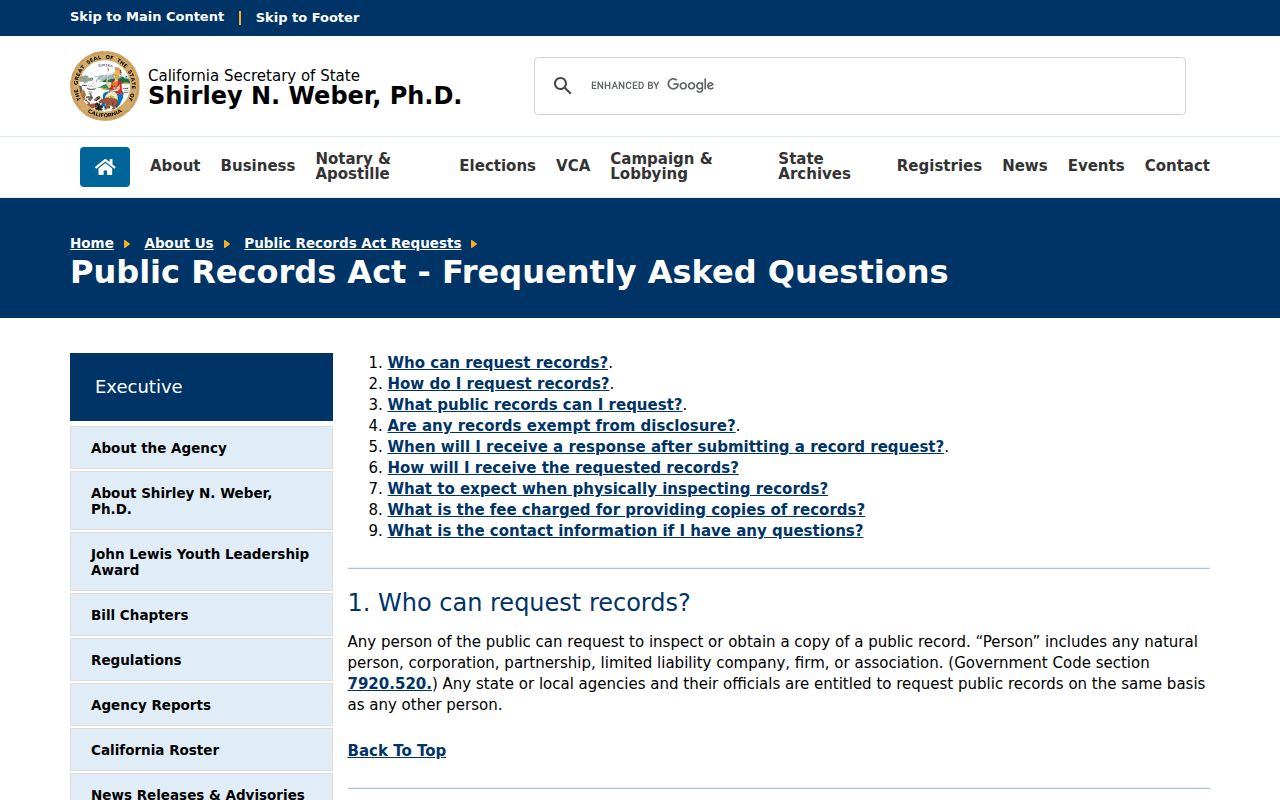
That guidance is a reminder to name the department, address, application number, and date span so a permit request can be answered from an existing file.
Newport Beach Obituaries and Probate Trails
Obituaries, death indexes, and probate files can close a previous-resident trail after a person leaves an address or dies. Newport Beach Public Library materials include local newspapers from the 1940s through the early 2000s, NewsBank access to the Orange County Register and Daily Pilot, and broader historical newspaper databases. Search an address in quotes, then add a surname, neighborhood, business, spouse, or relative and compare the result with an official death or court record.
Probate belongs to Orange County Superior Court, not the recorder. The court’s Case Access hub separates civil, criminal and traffic, family, probate, and small-claims routes. The account-based Orange County Case Name Search requires free enrollment; “Search Me” is free for the registered name, while other name searches may require payment. Results can show matching case numbers and filing dates, and a selected case can display the register of actions. The web data refreshes daily, but it is not the official file.
The court Records Unit at the Central Justice Center, 700 W. Civic Center Drive in Santa Ana, is the fallback for official files and certified copies. The counter is listed as open Monday through Friday, 8:00 a.m. to 4:00 p.m., at 657-622-8736. Family and civil copy requests may also be sent online or by email with form L-3009 to cjcrecordsmanagement@occourts.org. A family, probate, or estate reference may contain petitions, personal representatives, heirs, or notices, but addresses can be restricted or stale. Use a case number and party role to avoid confusing a same-name result with the person in the house history.
The court’s name-search gateway is useful for locating a case route, but it is not a current-address directory.
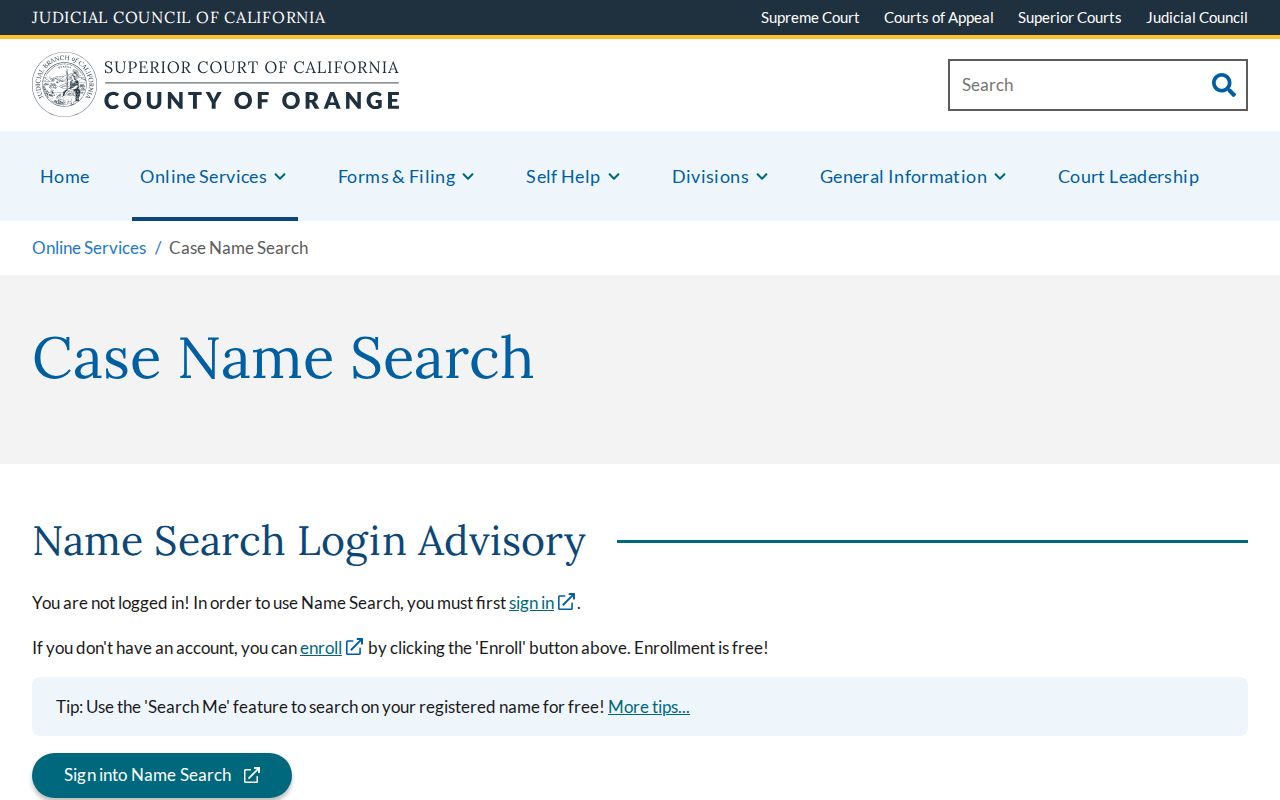
The image belongs with the probate workflow because it shows the entry point for a case-name search, not proof that a person lived at a particular Newport Beach address.
Newport Beach Annexations and Past Residents
Newport Beach’s municipal geography changed in ways that can break a simple address search. The city incorporated on September 1, 1906. Balboa Island and Newport Heights joined in 1917, Corona del Mar in 1924, Irvine Avenue and Bayside Drive in 1927, and Beacon Bay and Balboa Bay Club in 1930. Later harbor and coastal tracts, including Newport Coast geography, arrived in additional periods. An older directory may therefore file a place under a separate community or an Orange County-wide volume.
Older records also reach beyond the city. Orange County was created from Los Angeles County in 1889, so earlier land or court trails may use Los Angeles County or Spanish and Mexican land-grant records. The California State Archives collections provide a catalog and reference starting point for state-government series, maps, and historical material.
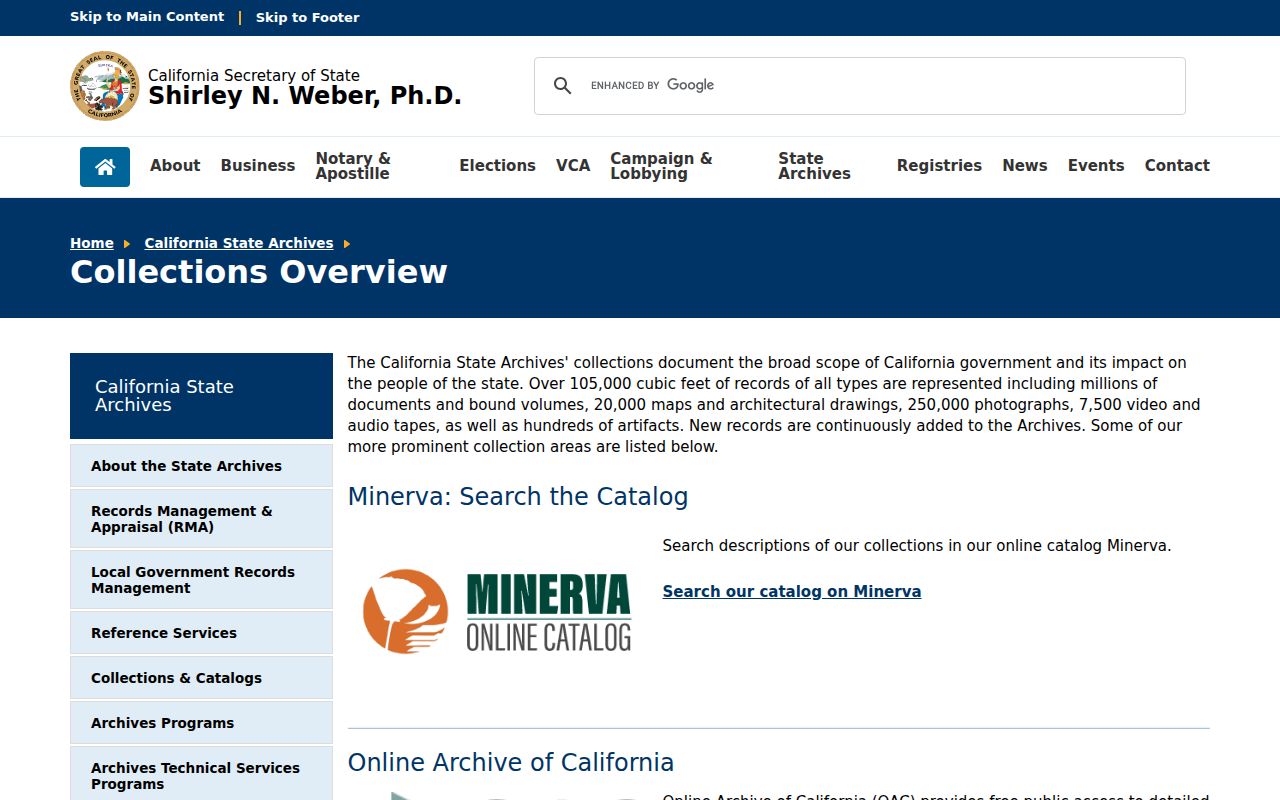
State Archives staff and catalogs can help locate older governmental or map material, but an exhaustive continuous Newport Beach directory run was not verified. Treat the documented sample years as confirmed examples and ask the holding institution to confirm each volume.
Lawful house history. Previous-resident research is appropriate for family history, heirs, address history, and personal curiosity. Do not use records to stalk, track, threaten, or harass a living person.